

Corpus Galabau · Guide · November 2026
How a paved area is built up
A paved area in the garden usually consists of several layers:
- Load-bearing ground: Topsoil and soft material are excavated, and the ground below is compacted.
- Base course: A layer of frost-resistant, compacted mineral aggregate carries the load and lets water drain away. How thick it needs to be depends on the soil and the use.
- Bedding: On top lies a thin, screeded layer of grit or sand into which the stones are set.
- Surface and joints: Stones or slabs are laid, the joints filled and the area compacted with a plate compactor, where the surface allows.
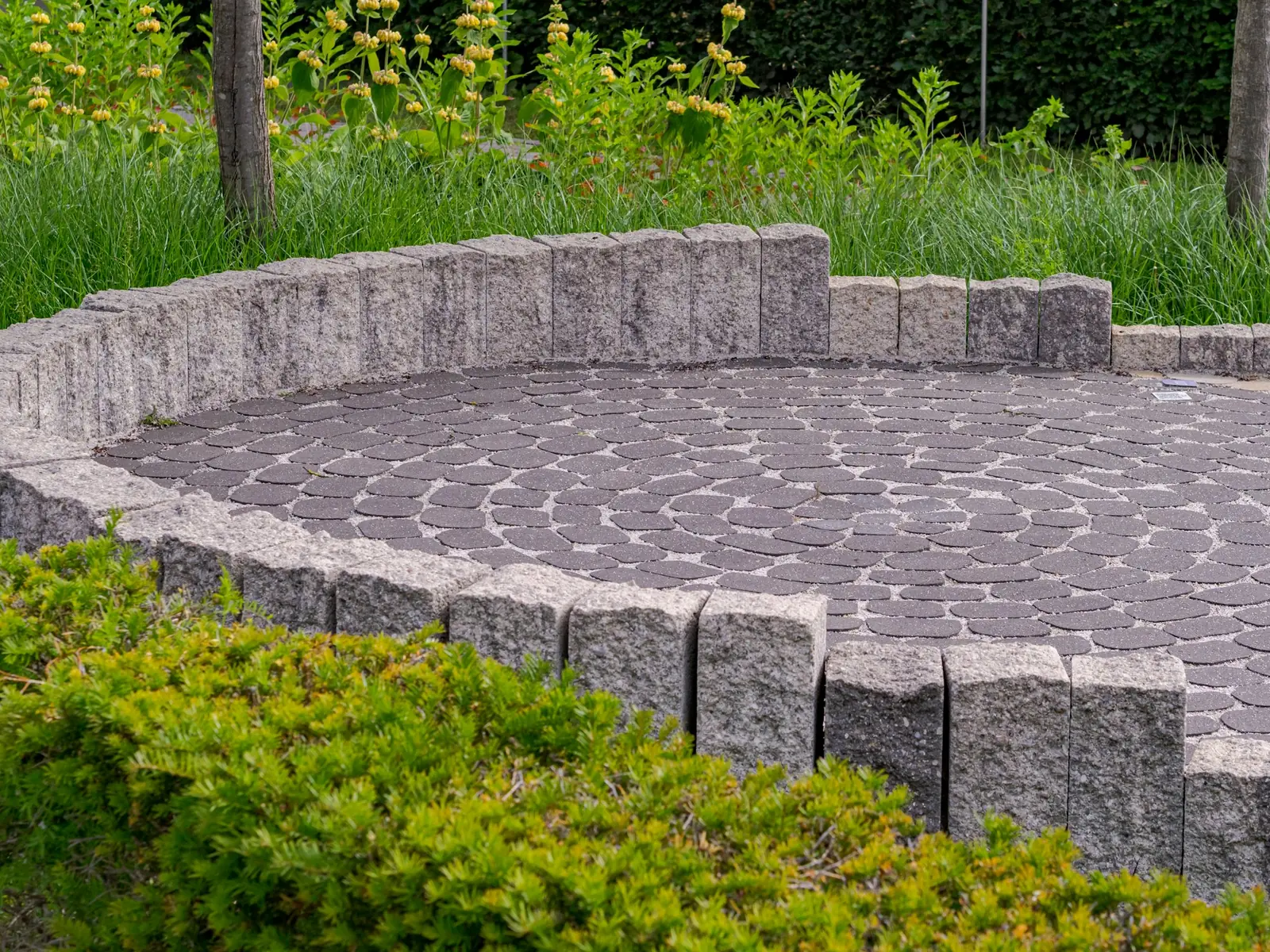
At the edge, a stable edging, for example a kerb set in concrete, holds the area together. Without edging, the stones gradually move outwards.
Slope: water must drain away from the house
Every paved area needs a slight slope so that rainwater runs off – for terraces always away from the house. In practice around 1.5 to 2.5 percent is usually planned, depending on the surface. That is barely visible to the naked eye, but it prevents puddles, ice in winter and damp on the house wall.
Permeable or sealed?
Paving with wide joints, grass grid pavers, grass-joint paving or gravel paths let part of the rainwater soak away. That relieves the sewer system. Many cities charge a stormwater fee for sealed areas that drain into the sewer. Whether and how your city takes permeable areas into account is set out in its fee regulations. For a terrace with a table and chairs, however, a level, firmly jointed surface is often more practical.
Choosing the material
- Concrete pavers and concrete slabs: wide choice, easy to combine, maintenance varies with the surface.
- Natural stone: durable and individual, sensitivity to stains varies by stone.
- Ceramic slabs: dense and easy to clean, but they require very careful laying.
- Gravel and grit: inexpensive and permeable, well suited to garden paths, less so to terraces with furniture.
Ask to see samples and pay attention to slip resistance, cleaning and how much the surface heats up in summer.
Joints and weeds
Over time moss and wild plants settle in the joints. Good to know: under the German plant protection act (Pflanzenschutzgesetz), weedkillers must generally not be used on paved areas such as paths, terraces and driveways. Joint scrapers, brushes, hot-water or flame weeders and a suitable jointing material have proven effective. Use pressure washers with care, as they can wash out jointing material.
What is possible without a permit – and what is not
Terraces and garden paths on your own plot generally do not need a permit in NRW. Development plans may, however, set rules on sealing or design. For retaining walls, terrace roofs or larger changes to the terrain, you should check beforehand whether a permit is needed.
How we can help
Corpus Galabau builds garden paths, terraces, stepping stones and edgings as part of garden and landscape construction, that is, on private plots and in outdoor areas. We do not take on public traffic areas or classic road construction. Before quoting, we check the ground, slope and drainage on site.


